


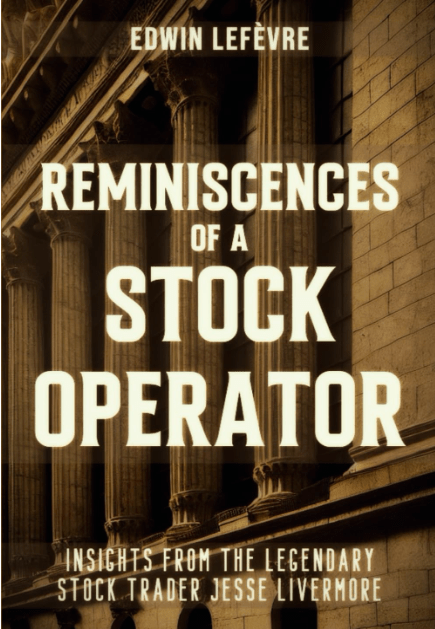
Who was Jesse Livermore
Takeaways from Reminiscences of a Stock Operator by Edwin Lefèvre for the Livermore principles
Summary
Related Video
Jesse Livermore — Who was he?
Jesse Livermore (1877–1940) was a legendary American stock trader and a pioneer of technical analysis. He began trading as a teenager and became famous for making—and later losing—several large fortunes through highly leveraged speculation.
Livermore was known for major trades during the 1907 panic and 1929 stock-market crash, but his career also demonstrated the dangers of leverage, overconfidence and poor risk management.
His life and trading philosophy inspired Reminiscences of a Stock Operator by Edwin Lefèvre, and his principles—particularly those involving price action and trading psychology—continue to influence investors today.
Takeaways from Reminiscences of a Stock Operator by Edwin Lefèvre for the Livermore principles
The market doesn’t care about opinions
The market doesn’t have to agree with an investor’s expectations. Successful speculation requires observing what prices are actually doing rather than arguing with the market or clinging to what prices should be doing.
Human nature doesn’t change
Booms, panics, greed and fear have appeared throughout market history. While stocks, technology and market structures change, the emotions that drive investors remain remarkably consistent.
Big money comes from sitting tight when the trade is right
Finding a good trade is only part of the challenge. The greater opportunity often comes from having the patience to remain invested while a favorable market move develops instead of constantly trading around a position.
Psychology can be the biggest enemy
Hope, fear, greed and impatience can cause significant damage to a trading account. Understanding market behavior is important, but controlling emotional reactions is equally important.
Averaging down can turn a mistake into a larger mistake
Adding capital to a losing position simply because the price has fallen can compound an original error. Accepting a manageable loss can be preferable to committing additional capital to a trade that isn’t working.
Cut losses and give successful positions room to work
Small losses are an unavoidable part of speculation, while large losses can seriously damage capital. The objective is to control downside risk while allowing profitable positions sufficient time to develop.
Wait for market confirmation
Having a strong opinion isn’t enough to justify an immediate commitment of capital. Waiting for price action to confirm an investment thesis can help reduce the risk of being early or acting on an unproven assumption.
The goal isn’t to be bullish or bearish — it’s to be on the right side
Successful speculators don’t need permanent allegiance to either direction. The objective is to recognize which side of the market is actually working and adjust accordingly.
Respect the prevailing trend
Trying to identify every market top and bottom can be costly. When a meaningful trend is established, working with that trend is often more productive than continually attempting to predict its reversal.
Price action can reveal more than opinions
What a stock actually does can be more informative than what investors believe it should do. Significant price movements and pivotal points can provide useful evidence about underlying strength, weakness and momentum.

Too much activity can be damaging
There is no requirement to trade simply because the market is open. Waiting for favorable conditions can be more productive than forcing trades when there is no compelling opportunity.
Speculation requires discipline and study
Successful speculation is not simply gambling on hunches. It requires preparation, observation, experience, record-keeping and the discipline to learn from mistakes.
Following the crowd can be dangerous at extremes
Investor confidence can become excessive during speculative periods, while fear can become extreme during major declines. Independent thinking becomes particularly valuable when market sentiment reaches an extreme.
Let the market confirm expectations
A market opinion alone doesn’t guarantee a profitable trade. Price action should provide evidence that an anticipated move is actually developing before significant capital is committed.
Increase exposure as the trade proves itself
Building a position as the market confirms the original thesis can be more disciplined than committing maximum capital immediately. This approach, associated with Livermore’s pyramiding strategy, emphasizes adding to positions that are working rather than automatically adding to those that are losing.
Rules only work when they are followed
Having sound principles is not enough to guarantee success. The real test comes during periods of pressure, when abandoning discipline can turn a sound strategy into a costly mistake.
Tips are no substitute for independent analysis
Relying on someone else’s market tip can be dangerous because the reasoning, timing and circumstances behind the recommendation may not be understood. Independent analysis and observation of market behavior provide a more reliable foundation for decision-making.
Distinguish normal fluctuations from being wrong
A profitable position won’t necessarily move in one direction every day. Successful speculation requires distinguishing ordinary market fluctuations from price action that genuinely indicates the original thesis may be incorrect.
Success can create dangerous overconfidence
Winning streaks can be psychologically dangerous because they can create the illusion that mistakes are no longer possible. Maintaining discipline after success is just as important as maintaining discipline after failure.
Market technology changes; human psychology doesn’t
Markets, financial instruments and technology continue to evolve, but fear, greed, hope, impatience and overconfidence remain familiar forces. That is why many of the psychological lessons associated with Livermore continue to resonate with investors today.
My View of Livermore’s Lessons
I’ve come to see Livermore’s approach as being less about predicting the market and more about discipline, patience, and controlling my own behavior. I need to respect the market’s direction, wait for confirmation, cut losses when I’m wrong, and give profitable positions room to develop.
I’ve also learned that human psychology hasn’t changed. Fear, greed, hope and overconfidence can influence investors just as much today as they did during Livermore’s era.
The biggest lesson for me is that having a good strategy isn’t enough—I have to follow it consistently. Avoiding tips, resisting the temptation to average down, limiting unnecessary trading, and remaining disciplined after both wins and losses can be more important than finding the perfect trade.
All content on this site is for informational purposes only and does not constitute financial advice. Consult relevant financial professionals in your country of residence to get personalized advice before you make any trading or investing decisions. This post was written with the assistance of artificial intelligence. The original ideas and final review are human-generated.
YouTube video
https://youtu.be/ZdgSoIebQKI?si=qsmmNBP0zC4n4Zjy